

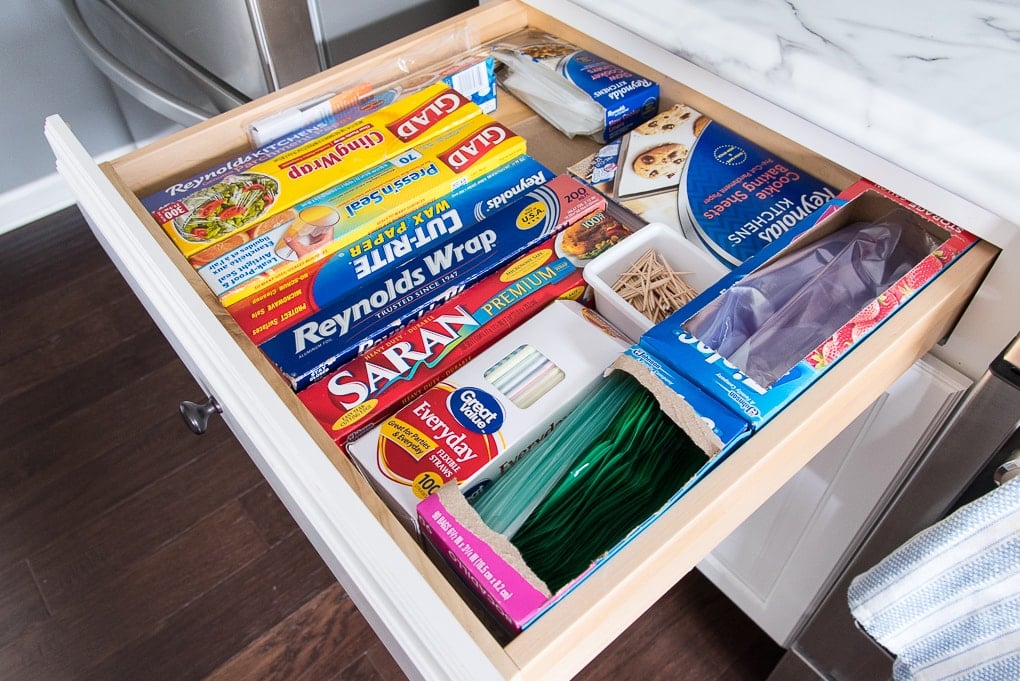
Cling Wrap Chaos
I only recently discovered what those little holes on the side of the cling wrap box are for. I know. I’ve lived a full life, written cookbooks, hosted people, fed multitudes — and yet, there I was, standing in my kitchen having a full-blown revelation over a cardboard box.
Those holes? You push them in and they hold the roll in place.
That’s it. That’s the tweet. Years — years — of the roll leaping out at me like a Jack Russell at a 60/60 driver, and all along the solution was two polite perforations quietly minding their business on the side of the box. I felt both enlightened and personally attacked.
Which brings me to cling wrap itself. There are two camps: perforated and unperforated. Perforated cling wrap is the overachiever. It’s neat, measured, and behaves like it went to a good school. You pull, it tears exactly where it should, and you feel like the kind of person who has matching Tupperware lids.
Unperforated cling wrap? That’s the wild child. It’s chaos in a cardboard box. You pull, it stretches. You tug, it clings — to itself, to your elbow, to a passing family member. You attempt to tear it, and suddenly you’re holding a crumpled, staticky ribbon that looks like modern art. Somewhere along the line, it folds over itself and at some point you just give up and put a plate over the bowl like your mother did.
Then there’s baking paper. Or parchment paper, if you want to sound fancy. The question that has quietly unsettled home bakers for years: is there a right side? Here’s the thing — most of the baking paper we get here doesn’t care. It’s ambidextrous. Both sides work.
And just when you think you’ve got baking paper figured out, along comes the fancy version. The one with lines, measurements, circles… even outlines of gingerbread men. I mean — what is this? Am I baking or doing a colouring-in competition? The lines are meant to help you space things evenly, roll pastry to size, and keep your biscuits looking like they belong in a Woolworths ad. The gingerbread men outlines, I assume, are there for when you’ve completely lost confidence in your own ability to recognise the shape of a human.
Wax paper is the mysterious cousin in the drawer. It looks like baking paper, feels like baking paper, but it absolutely can’t handle the heat. Put it in the oven and you’ll quickly realise you’ve made a terrible, waxy mistake. Wax paper is best used for wrapping sandwiches, lining counters for messy tasks, or separating layers of baked goods. It’s the supporting actress, not the lead.
And then, tinfoil. The great shiny debate. Shiny side up or down? People have opinions. Strong ones. The truth? It makes almost no difference. The only thing that matters is that it doesn’t stick to your food and undo all your hard work. A little oil, a bit of common sense, and we can all move on.
So there you have it. A drawer full of rolls, secrets, and quiet betrayals. And if you take nothing else from this — check your cling wrap box. Those holes might just change your life.
Text: Chantal Lascaris